13 Oct 2026 3:34pm
#CULTURE + LIFESTYLE
Nine artists from the Paemanu: Ngāi Tahu Contemporary Visual Arts residency program take over the Aigantighe Heritage House in a major group exhibition opening October 16 running through to May 2027.
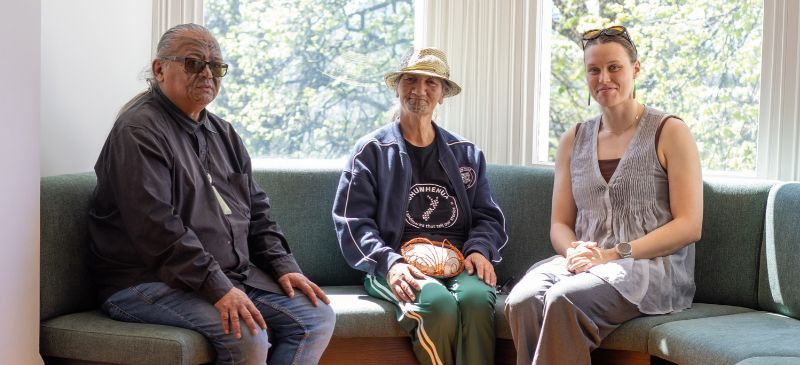
The Paemanu: Ngāi Tahu Contemporary Visual Arts residency which is a programme that supports artists to deepen their connections with their Kāi Tahu marae, hapū and whānau. The nine artists part of the exhibition Kia Māhora, Kia Wātea, Kia Rere! met at a wānaka (a gathering for learning) to visit the Aigantighe House, and the Timaru district alongside kaumātua and tuākana from Te Rūnanga o Arowhenua.
The exhibition's title draws on two kupu: māhora, to spread out or unfold, and wātea, a state of openness and potential. Together they offer a way of thinking about cycles of return as an ever-expanding whakapapa, Aigantighe Art Gallery Exhibitions Curator and Kia Māhora, Kia Wātea, Kia Rere! Co-curator Isobel Hillman said.
Each artist's journey across Te Waipounamu from Murihiku to Mangāmaunu was shaped by the understanding that knowledge is gathered through presence, repetition, and relationship with the whenua. For Kāi Tahu, return is not simply looking back; it is following pathways formed by atua, tīpuna, whānau, awa, tai, tītī, tuna, tī kōuka, kōhatu and pūrākau.
Aigantighe House becomes, for the duration of the exhibition, a temporary nohoaka- a place to pause, gather what has been carried, and make visible what continues to surface.
The exhibition acknowledges the layered histories held within the gallery building itself, Ōtautahi based multidisciplinary artist and Kia Māhora, Kia Wātea, Kia Rere! Co-curator Megan Brady said.
"The unfolding of wātea is both spatial and political. The exhibition acknowledges the settler histories embedded in the house and its foundations, while creating opportunity for Kāi Tahu artists to return to areas their tīpuna knew intimately, asserting presence, relation, and sovereignty through mahi toi.”
Hillman said the exhibition is as much about release as it is about return.
"It is an exhibition of return, but also of release: a clearing in which new forms of Kāi Tahu visual culture can spread out, take breath, and remain in motion," she said.
The residency programme reflects a long-held desire to enable reconnection for Kāi Tahu artists, Paemanu Charitable Trust Co-Chairs Martin Awa Clarke Langdon and Mya Morrison-Middleton said.
"The Paemanu Residency programme, from which this exhibition emerged, came from a desire to enable reconnection for our artists. Not only at an iwi level, but to the places and people at the heart of each of our hapū," they said.
Paemanu founding member Simon Kaan, who was instrumental in establishing the residency programme, said the idea took shape during a hui at Puketeraki marae in Karitāne.
"Being at the marae brought home the importance of gathering as artists at marae, not just in galleries. None of us were pā kids raised on our marae. We all had various experiences of connection. The importance of a residency and the value of whanaukataka became obvious,” Kaan said.
Kia Māhora, Kia Wātea, Kia Rere! features work by Tia Barrett, Conor Clarke, A.J. Manaaki Hope, Kate Stevens West, Turumeke Harrington, Ana Hislop, Emma Hislop, Ngaumutane Jones and Te Moananui a Kiwa Rehu Ryan.
“The Aigantighe and Paemanu extend they’re thanks to kā rika raupā o Te Rūnanga o Arowhenua for their manaakitaka and guidance throughout the project,” Brady and Hillman said.
Kia Māhora, Kia Wātea, Kia Rere! opens at the Aigantighe Art Gallery at 6.30pm on Friday 16 October 2026 and runs until 9 May 2027.
From order of appearance in the release
- Māhora — to spread out, unfold, open up
- Wātea — open, free, unoccupied; a state of openness, availability, potential
- Rere — to fly, flow, run (kia rere — "fly!")
- Wānaka — a gathering for learning, discussion and the transmission of knowledge
- Kaumātua — elder(s)
- Tuakana — a senior/more experienced person who guides a younger person
- Te Rūnanga o Arowhenua — the tribal council of Arowhenua
- Manaakitaka — hospitality, care, generosity, support
- Te Waipounamu — the South Island
- Murihiku — The tail end, the area south of the Waitaki River
- Mangāmaunu — Kaikoura coast
- Whenua — land; also placenta/afterbirth, reflecting the connection between people and land
- Atua — ancestral deities, supernatural beings
- Tīpuna — ancestors
- Awa — river
- Tai — tide, sea
- Tītī — muttonbird (sooty shearwater), a culturally significant food source
- Tuna — eel
- Tī kōuka — cabbage tree; also the practice of cooking its root as food
- Kōhatu — stone, rock
- Pūrākau — traditional narratives, myths, stories
- Nohoaka — a seasonal or temporary dwelling, campsite, settlement (Kāi Tahu dialect form of nohoanga)
- Ōtautahi — Christchurch
- Mahi toi — art, creative work
- Pukapuka — book
- Whakaaro — thought, idea, perspective
- Whanaukataka — kinship, relationship, sense of connectedness
- Kā rika raupā — senior/experienced leaders, elders of standing
- Pae — a perch or resting bar
- Manu — bird(s)
- Pou Tokomanawa — literally the central support post of a wharenui; used as a title for a key cultural figure/mentor