The full information document can be downloaded here:

We’re preparing our plans for the next year with a backdrop of significant uncertainty.
From the tsunami of reforms from Wellington to the significant economic shocks from the Middle East, our team’s focus is on ensuring that the Timaru District and the services that you use every day are set up to help us thrive in the long term.
We know the pressures that households are facing, and have had a particular focus on improving efficiency and achieving better value for ratepayers. We have listened and we have reduced our costs in meaningful ways that have a real effect on your rates bill.
This has enabled us to recommend a rates rise lower than the 12% in the Long Term
Plan, while also ensuring the council delivers a small surplus to enable us to start tackling debt and lower the amount we pay in interest.
A lot of this work is in targeting the everyday operating costs that make up the majority of your rates bill each year. With this, our core intent is to make the council leaner and more financially sustainable while reducing our need to borrow to replace your essential assets, like water pipes and roads.
However, we do not believe there is sufficient public support for the previously planned rates increase, or for significant
reductions in levels of service. A 9% increase strikes a balance between affordability and maintaining these essential services. This is a 3% reduction from what was forecast in our Long Term Plan, and overall still positions Timaru District rates as some of the lowest in the country.
When you remove the increase in water rates, which is allowed for in the rates capping proposal, the rise is 3.7%, and sits
within the 2-4% target suggested by the Government.
Progress continues on the key projects outlined in the previous Annual Plan. The Theatre Royal and Museum projects have
completed ground and civil works, with museum foundations now underway. The Aorangi Stadium and Events Centre project
is on its way to completion in early 2027, and will provide a high quality regional facility for local users and increase
economic benefit from national events.
From a core infrastructure perspective, upgrades throughout our water supply network and investment in roading will
strengthen infrastructure resilience for future generations.
While we know the details of some of the reforms such as Local Water Done Well, and work is well underway on establishing
our water organisation with Mackenzie District Council, we’re still waiting to find out the finer details of Simplifying Local
Government, Resource Management and Rates Caps. We can be reasonably sure that councils are likely to be very different organisations only a few years from now.
This Annual Plan ensures that all the critical services that everyone uses every day will enter this period of change
on an affordable and sustainable pathway.
Nigel Bowen
Mayor/ Koromatua
What's planned for 2026/27
Here’s a snapshot of some of the projects that make up more than $107 million of investment in services we plan to deliver or progress over 2026/27.
Many of these are multi-year projects so the investment amounts below only apply to the 2026/27 year.
| Project | Investment in 2026/27 |
|---|---|
| Unsealed Road Rehabilitation | $1 million |
| Bridge and Large Culvert Renewals | $2.7 million |
| Timaru Water Treatment Plant Upgrade (Claremont) | $15.8 million |
| Heaton Hayes Southern Port Access Resilience | $2.7 million |
| Sewer Renewals | $3.4 million |
| Replacement Dog Pound | $438,000 |
| Aorangi Stadium and Events Centre Upgrade | $7.2 million |
| Sealed Road Resurfacing | $4.9 million |
| Pareora River Intake Renewal for Timaru | $1.4 million |
| Theatre Royal and Museum | $25.8 million |
A detailed list of capital projects can be found here:
Update on Key Projects
Many of the major intergenerational projects consulted on and supported by the community in previous long term plans are now in their delivery phase. Here’s what is coming in 2026/27.
Bringing the theatre royal back to life
The restoration and redevelopment of the Theatre Royal is being delivered alongside the Museum as a coordinated
project with a total spend in 2026/27 of $25.8 million. The project includes a range of essential asset upgrades,
including seismic strengthening and building configuration improvements, which will deliver a better audience
experience and provide up to date stage facilities, while retaining the theatre’s recognised heritage values. The
wider site, located on Stafford Street, includes the creation of a flexible new public space. The new laneway connection
to Barnard Street will enhance pedestrian connectivity and improve integration between the Theatre, Museum, and
Timaru’s central retail and cultural area, and is aimed at helping spur-on private development in this part of town.
A stadium fit for our future sporting legends
$7.2 million to finish off the new Aorangi Stadium and Events Centre is included in the 2026/27 Annual Plan.
The work builds on the existing and busy events centre to expand it into a regionally significant sporting facility
supporting growth in indoor sports, and catering to a larger number of events. Over the course of this Annual Plan
the stadium will enter its final delivery phase. Earthquake strengthening of the existing stadium has been completed,
with construction of the new stadium and link building now underway. Practical completion is expected in early-mid 2027.
A new museum to share and protect our history
Located in the laneway with the Theatre Royal, the new Museum forms part of the new cultural precinct for Timaru.
The project builds on the direction established through the 2021-2031 Long Term Plan with further refinements to
better use the available space.
The development will deliver upgraded exhibition and education spaces that meet modern visitor expectations,
support museum standards, and ensure the facility remains sustainable and capable of protecting and sharing South
Canterbury’s history in the long term.
A better way of delivering water services
As part of Timaru District Council’s response to the Government’s Local Water Done Well reforms, and in
consultation with the community, Council decided to separate its water and wastewater services into a new
council owned joint Water Services Organisation with Mackenzie District Council.
Over the next year the council will be working to establish this organisation, which will be in charge of delivering high
quality, sustainable and affordable water services to homes and businesses throughout the Timaru and Mackenzie
Districts from 1 July 2027.
While there will be work going on throughout 2026/27, our core commitment to deliver high quality water to your taps
or tanks will remain unchanged over this period.
What's changed
When our Long Term Plan was written in 2024 it set out the projects we were planning to undertake over the next decade. While we aim to plan as accurately as possible, forces out of our control such as changes in legislation, or reactive and urgent projects mean that sometimes we have to amend what we’re doing in any given year.
| Category | Proposed 2026/27 | Year 3 LTP | Difference |
|---|---|---|---|
| Capital projects programme (@ 100% delivery assumption) | $106 million | $75 million | +$31 million |
| Operating Costs | $142 million | $158 million | -$16 million |
Changes to our Capital programme
Our capital budget covers the cost of building, replacing and upgrading assets that help deliver services to our community — things like roads and bridges, water treatment plants, and community and sports facilities.
Capital projects where we replace something ‘like-for-like’ are called a renewal and this is usually funded by depreciation or reserves. Some of these projects get grants and subsidies to help with the cost, such as in roading where we get NZTA funding.
When we build something new, this is generally funded through borrowing, where sometimes we also get grants or subsidies to help with the cost. An example of this is the Theatre, Museum and Stadium projects which received grants from Government.
For some projects we can have a mix of all the different funding components. An example of this would be renewing an existing bridge (depreciation and/or reserves), which is part of the approved work programme (NZTA funding), and we are making better by increasing it to two lanes (borrowing).
The significant increase to the capital spend in our annual plan was from moving the majority of the theatre, museum and stadium work into the 2026/27 year due to project timing and rescoping aimed at saving money.
There are other, smaller changes where we have discovered through investigation that work wasn’t needed, re-sequenced work to deliver it more efficiently and it fit with other projects, or where central government funding priorities have changed such as in our roading programme.
A full list of capital projects and a breakdown of the changes can be found here:
Changes to operating costs
Our operating budget covers the day to day costs of running all the services council provides such as parks, swimming pools, libraries, waste management, salaries, democratic services, customer services, roading and footpaths, water services and financing depreciation which goes towards funding asset renewals, as well as costs such as interest on council borrowing.
These are the day-to-day costs that we meet directly from rates, fees and charges and grants and subsidies, rather than lending. This means that, while smaller than changes in our capital spending, any increases or reductions that we make on these day to day costs have a more significant impact on your rates bill than the larger capital items.
The council has put significant work into reducing operational spend by increasing efficiency, and has benefited from a favourable borrowing environment due to lower interest rates. Some of these operational savings include:
- $2.5 Million reduction in personnel costs
- $4.7 Million in efficiency savings including a reduction in consultant costs
- $2.5 Million in interest costs due to interest rates and project timing
Rates questions
How does this all affect rates bills?
Despite the council’s endeavours to cut the costs we can control, we have faced a significant increase in the costs of providing our core services. The things we purchase such as bitumen to make roads and replacement pipes have got a lot more expensive. In many cases the materials and services Council buy have increased at a much higher rate than is reflected by the measure of general household inflation, the CPI, so we have had to propose an increase in the overall amount of rates we collect by 9%.
Rates are complex and every rates bill is different due to property valuation, location, type of property and what services it receives such as kerbside collection, water or wastewater. This means we can’t give you an ‘average’ rates bill, and the headline rates rise you see doesn’t apply to everyone equally. However, we can show you what a rates bill looks like for a typical property in our main centres.
The tables below shows the proposed 2026/27 rates for a sample of typical residential properties in urban communities and sample rural and commercial/industrial properties. This is based on Council’s proposed option of 9%.
Note that this only covers the Timaru District Council part of your rates bill. Regional Council rates, which also appear on your rates bill, are independently set by Environment Canterbury.
Rates driver: Increase in water operations spending
The largest single item contributing upward pressure on rates is the forecast increase in operating costs for water supply, this is the cost of treating drinking water and undertaking reactive network repairs.
Costs for this activity have increased by more than a third in recent years and we were not collecting enough income to cover them, so we have had to re-set the rates in line with actual costs over the past year.
The amount also includes compliance costs which have come in since the Long Term Plan was set, such as more than $196,000 in levies for the Government’s Water Services Authority.
What's the difference between UAGC, General Rates and Targeted Rates?
The Uniform Annual General Charge (UAGC) is a flat amount everyone pays, which in this Annual Plan is proposed to be $1,214.16. This covers the cost of providing community amenities, such as roads, landfill operations, open spaces, libraries and footpaths.
General rates vary by your land value and property type and cover the things such as Elected Members and meetings, Arts and Community Amenities, Civil Defence, Environmental Health, Road and Street Landscapes, Economic Development and Promotion and Airport costs not covered by the UAGC.
Targeted rates pay for services that individuals use, such as drinking water, wastewater and kerbside rubbish collection. If you don’t get these services, for example if you have a septic tank system, a private water bore or you don't get rubbish collectoin, you don't pay for them.
Why don't my rates go up by the amount you say?
When we say that we are putting rates up by 9%, this reflects the average overall rates increase across all properties. When you split that out over all the different types of property, different land values and different services provided to each property some individual bills may be higher than 9%, some may be lower than 9%.
Where certain activities, such as water, see larger-than-average cost increases, ratepayers connected to those services will see a larger portion of the overall rise. For example a rural property not connected to water would see a smaller overall increase, than a house in town.
Why aren't you following the rates capping advice?
We are. As part of the proposed rates capping regime, costs of water services aren’t included in the rates cap calculation. When you take out the increase in water costs from the rates increase, the overall increase is around 3.7%, within the proposed 2-4% band.
Sample Property Rates
The table below shows the proposed 2026/27 rates for a sample of typical residential properties in urban communities and sample rural and commercial/industrial properties. This is based on Council’s preferred option of 9%. NOTE: These tables only detail Timaru District Council rates, not the regional rates which feature on TDC bills, but are set by Environment Canterbury.
Residential Property Rates
These samples are based on an individual property with a land value average for the town and that receives ‘urban’ levels of service such as wheelie bins, water, sewerage and stormwater. This is why the General Rates are similar to the targeted rates.
 |  |  |  | |
|---|---|---|---|---|
| Land Value (2023 Valuation) | $220,000 (Average) | $205,000 (Average) | $165,000 (Average) | $260,000 (Average) |
| UAGC | $1,214.16 | $1,214.16 | $1,214.16 | $1,214.16 |
| General Rates | $713.72 | $665.06 | $535.29 | $843.49 |
| Community Works and Services (Stormwater) | $279.10 | $7.76 | $239.37 | $372.48 |
| Community Board | $10.00 | $11.00 | $10.00 | $0.00 |
| Waste Management (Standard bin set) | $420.00 | $420.00 | $420.00 | $420.00 |
| Water | $846.26 | $846.26 | $846.26 | $846.26 |
| Sewer | $444.31 | $444.31 | $444.31 | $444.31 |
| Total Rates | $3,927.55 | $3,608.55 | $3,749.39 | $4,140.71 |
| Increase % over 25/26 | 9.7% | 11.4% | 11.4% | 11.2% |
| Increase $ over 25/26 | $348.02 | $369.82 | $384.49 | $417.63 |
| Weekly Cost | $75.53 | $69.40 | $72.10 | $79.63 |
| Daily Cost | $10.76 | $9.89 | $10.27 | $11.34 |
Rural and Commercial Rates
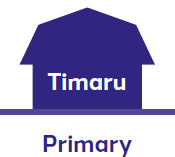
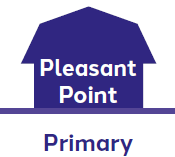
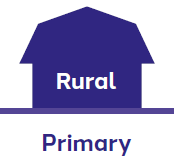
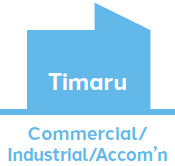
Rural and commercial properties are a lot more complex to give examples of due to the wide range of different types of property. As rural properties get less ‘urban’ services they often pay a smaller number of targeted rates. Commercial, Industrial and Accommodation pay a ‘differential’ (see below) to reflect the commercial gain they make from council services.
 |  |  |  | |
|---|---|---|---|---|
| Land Value (2023 Valuation) | $510,000 (Average) | $550,000 (Average) | $2,270,000 (Average) | $630,000 (Average) |
| UAGC | $1,214.16 | $1,214.16 | $1,214.16 | $1,214.16 |
| General Rates | $1,113.43 | $1,200.76 | $4,955.85 | $8,882.34 |
| Business Improvement District | $0 | $0 | $0 | $500 |
| Community Works and Services (Stormwater) | $730.64 | $20.82 | $112.35 | $902.56 |
| Community Board | $0 | $11.00 | $10.00 | $0.00 |
| Waste Management (Large bin set) | $540.00 | $0 | $0 | $0 |
| Water | $846.26 | $0 | $0 | $846.26 |
| Sewer | $444.31 | $0 | $0 | $444.31 |
| Total Rates | $4,888.79 | $2,446.74 | $6,292.37 | $12,789,63 |
| Increase % over 25/26 | 10.8% | 3.5% | 2.2% | 5% |
| Increase $ over 25/26 | $476.79 | $81.88 | $132.96 | $612.28 |
| Weekly Cost | $94.04 | $47.05 | $121.01 | $245.95 |
| Daily Cost | $13.39 | $6.70 | $17.24 | $35.04 |
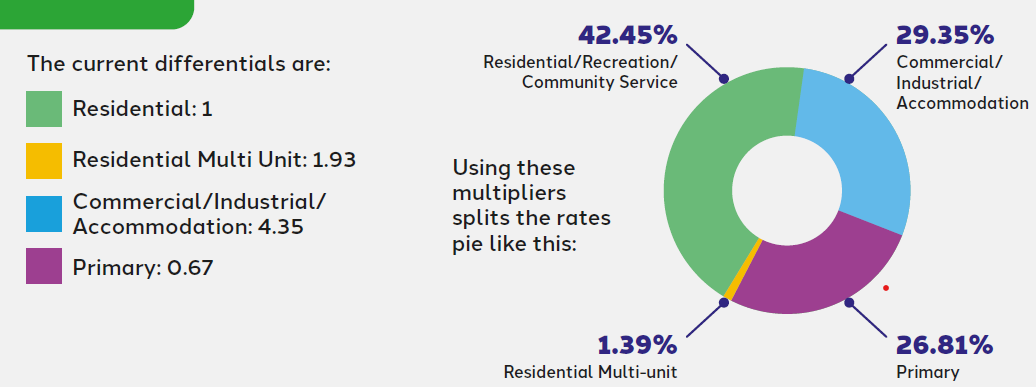
What's a differential?
Differentials are used to allocate the General Rate to different property categories. Council’s policy is to ensure each property category pays about the same overall proportion of the General Rate every time a property revaluation occurs. Residential properties are the basis of these calculations, with different categories paying different multipliers of these.
Supporting Information
Feedback
We welcome any feedback you may have on our Annual Plan, you can share your views with us at feedback@timdc.govt.nz or Timaru District Council, PO Box 522, Timaru 7940.
All feedback will be collated and presented to council as part of their deliberations on the 26th May.
Privacy statement
All submissions are public information and will be included on Council’s website and/or in public documents located at Council offices and Libraries/Service Centres. This will include your name and, if applicable, the organisation you represent.
Contact information that you provide via the submission form will be accessible to and used by Council staff only for submission administration purposes; it will not be made publicly available. However, the content of any attachments that you provide with your submission - including any private and contact information - may not be redacted. Please contact us via feedback@timdc.govt.nz if you have any questions about this, before making your submission.
All information is held by Council in accordance with the Privacy Act 2020. You have the right to access and correct personal information. Nothing in this Privacy Statement overrides, or will prevent Council meeting its obligations under, the Local Government Official Information and Meetings Act 1987, or any other relevant legislation.
Last updated: 23 Apr 2026